27 Centipede Tattoo Ideas That Look Bold, Dark, and Unexpectedly Stylish

Centipede tattoos are not exactly the quiet choice, and that is what makes them so memorable. Their long segmented bodies, delicate legs, and natural curves can follow the shape of an arm, leg, shoulder, or back in a way that feels almost alive. Depending on the style, a centipede can look eerie and realistic, bright and traditional, elegantly minimal, or wonderfully surreal.
This collection of centipede tattoo ideas includes colorful designs, detailed blackwork, red ink, simple outlines, arm wrap compositions, unusual skull motifs, and dramatic large-scale pieces. Some feel playful, some feel intimidating, and others have a strangely beautiful quality that makes you look twice. Whether you want a small first tattoo or a bold statement piece, these ideas offer plenty of inspiration.
1. Colorful Traditional Centipede Tattoo
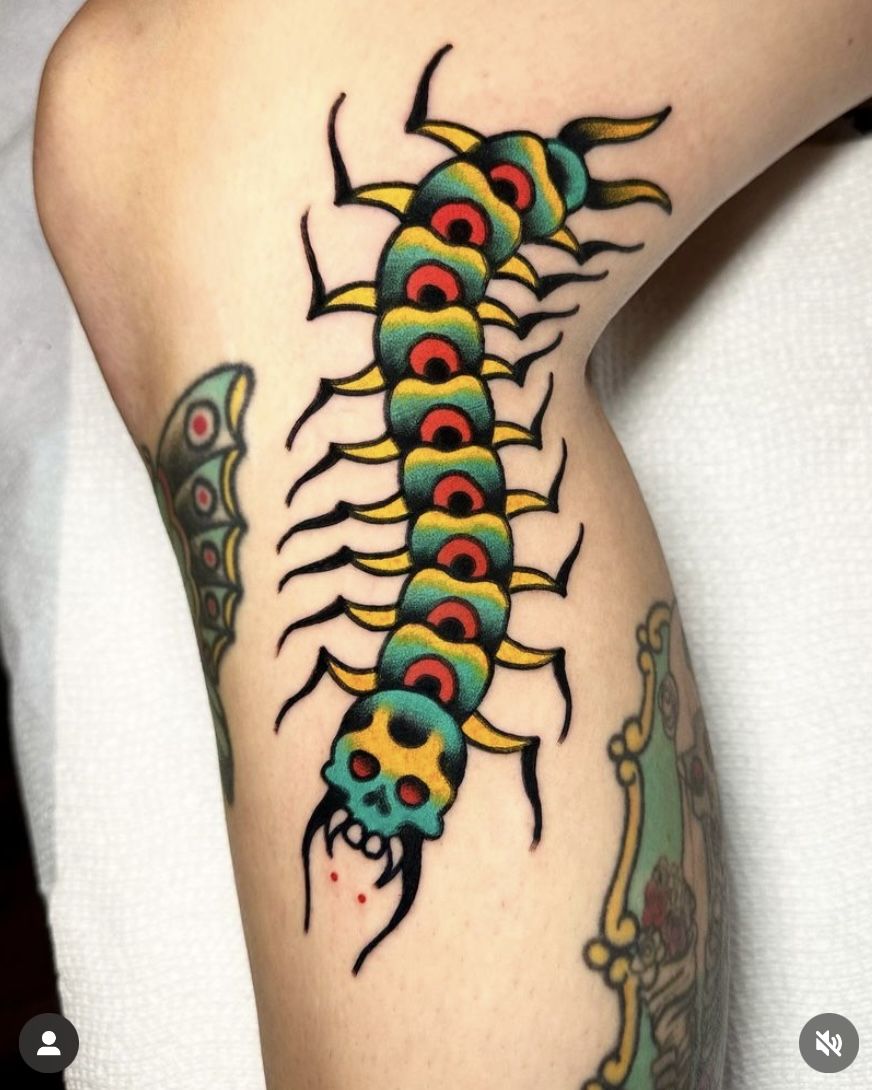
This colorful centipede has all the confidence of classic tattooing, but the bright palette makes it feel wonderfully unexpected. Turquoise body segments, golden details, vivid red circles, and a skull-like head create a design that is playful and intimidating at the same time. The bold outline holds everything together, while the curved body gives the creature a lively sense of movement. It is the kind of tattoo that instantly becomes a conversation starter without needing any additional symbols or lettering.
A traditional piece like this needs enough room for every segment and leg to stay clear, so the upper arm, thigh, calf, or outer leg would be ideal. Strong black outlines will help the bright colors remain readable as the tattoo ages. This design could also be adapted into a partial arm wrap by increasing the curve slightly. It is a great option for someone who loves old-school tattooing but wants something less predictable than a rose, panther, or snake.
2. Red and Black Forearm Centipede
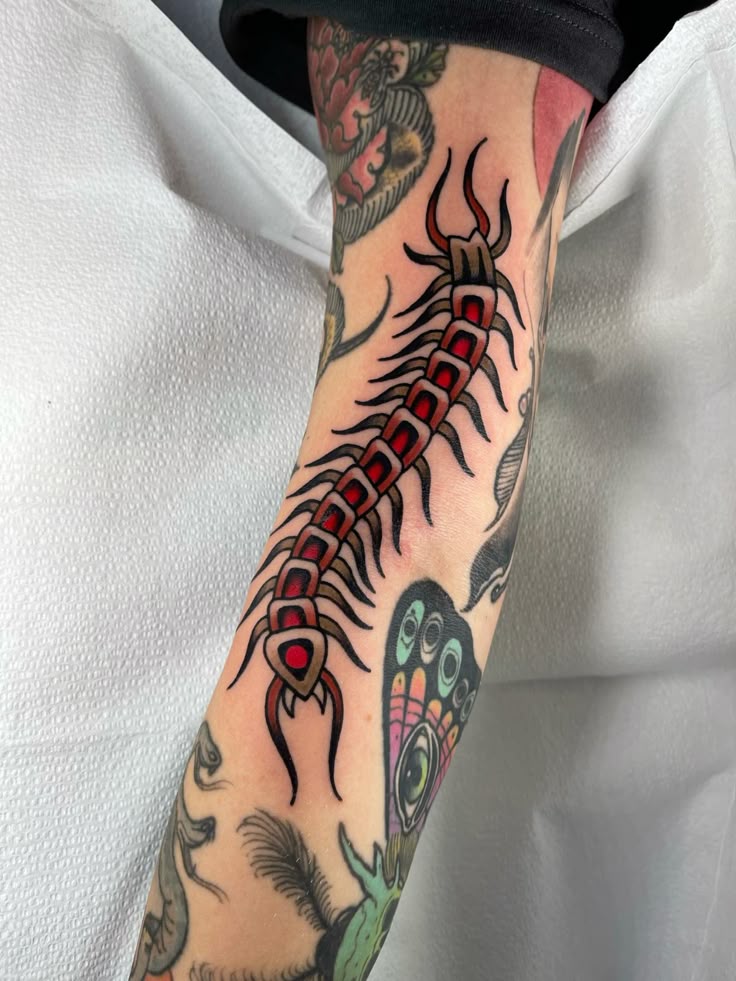
This narrow centipede creates a sharp, confident line along the forearm. Its repeating red centers add rhythm to the dark body, while the long legs make the design feel energetic rather than stiff. The limited color palette keeps the tattoo strong and graphic, allowing it to fit naturally among other bold pieces without becoming visually overwhelming. It has a distinctly Trad attitude, yet the clean arrangement gives it a slightly more modern appearance.
The forearm is a natural placement for this shape because the creature can follow the length of the arm without being compressed. Ask your artist to prepare a precise design stencil so the repeated segments remain evenly spaced. Red ink draws attention quickly, so keeping the surrounding body mostly black creates a better balance. This layout works especially well for men and women building a patchwork sleeve, since the long, narrow form can fill an awkward open space.
3. Dark, Realistic Black-Worked Centipede
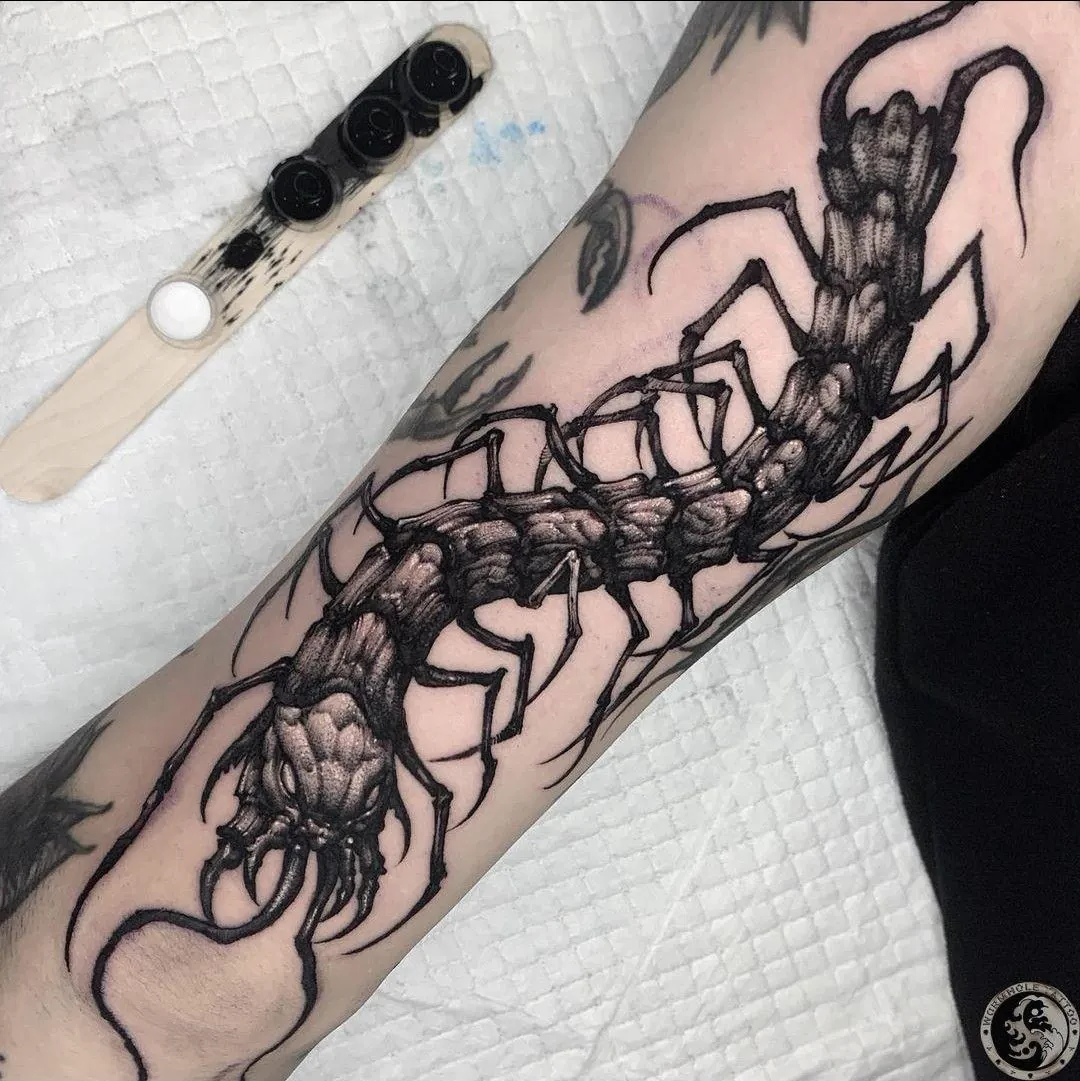
This heavily detailed centipede has the unsettling beauty of a creature discovered beneath an ancient stone. Deep shadows, textured armor, and angular legs create an almost three-dimensional effect. The curved body makes the tattoo feel as though it is moving across the skin rather than resting flat against it. There is plenty of darkness here, but small areas of light prevent the design from becoming one solid mass.
A detailed blackwork piece needs a generous canvas, making the forearm, calf, outer arm, or lower leg a strong placement choice. The artist should leave small gaps between the darkest sections so every plate and joint remains visible after healing. Compared with a simple outline tattoo, this version will require more time and careful aftercare. The finished result, however, has an impressive depth that suits anyone drawn to dramatic natural imagery and realistic textures.
4. Double Centipede Leg Tattoo
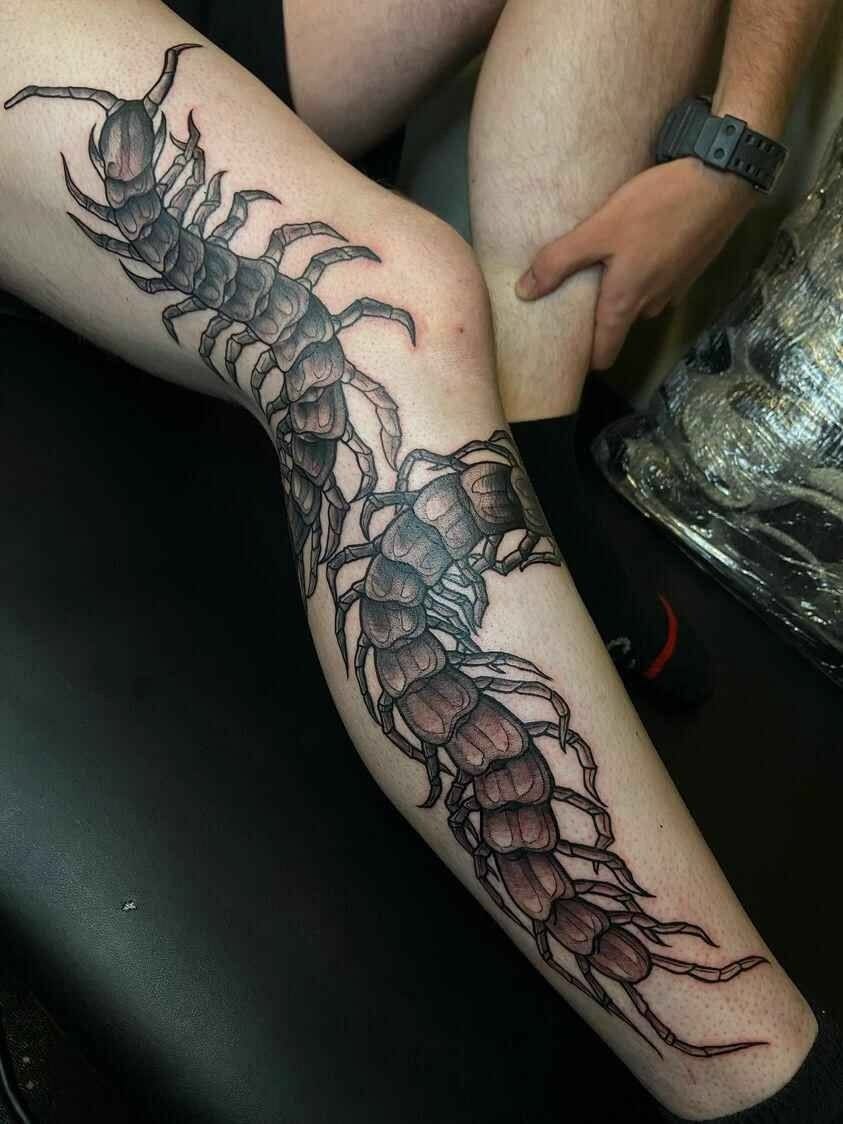
Two centipedes winding around the leg create a composition that feels alive and constantly changing. Their overlapping bodies bring dimension to the design, while the muted gray and earthy shading keep the overall look sophisticated. Instead of relying on bright color or dramatic background elements, this tattoo creates impact through movement, scale, and repetition. It feels powerful without being excessively loud.
This type of design works best across a large section of the thigh or lower leg, where both creatures can curve naturally. The placement should follow the muscles rather than forcing the bodies into a perfectly straight line. Slightly different shading on each centipede will help separate them visually. There is also plenty of room to expand the piece later with botanical details, bones, an eye, or additional blackwork elements.
5. Detailed Brown Forearm Centipede
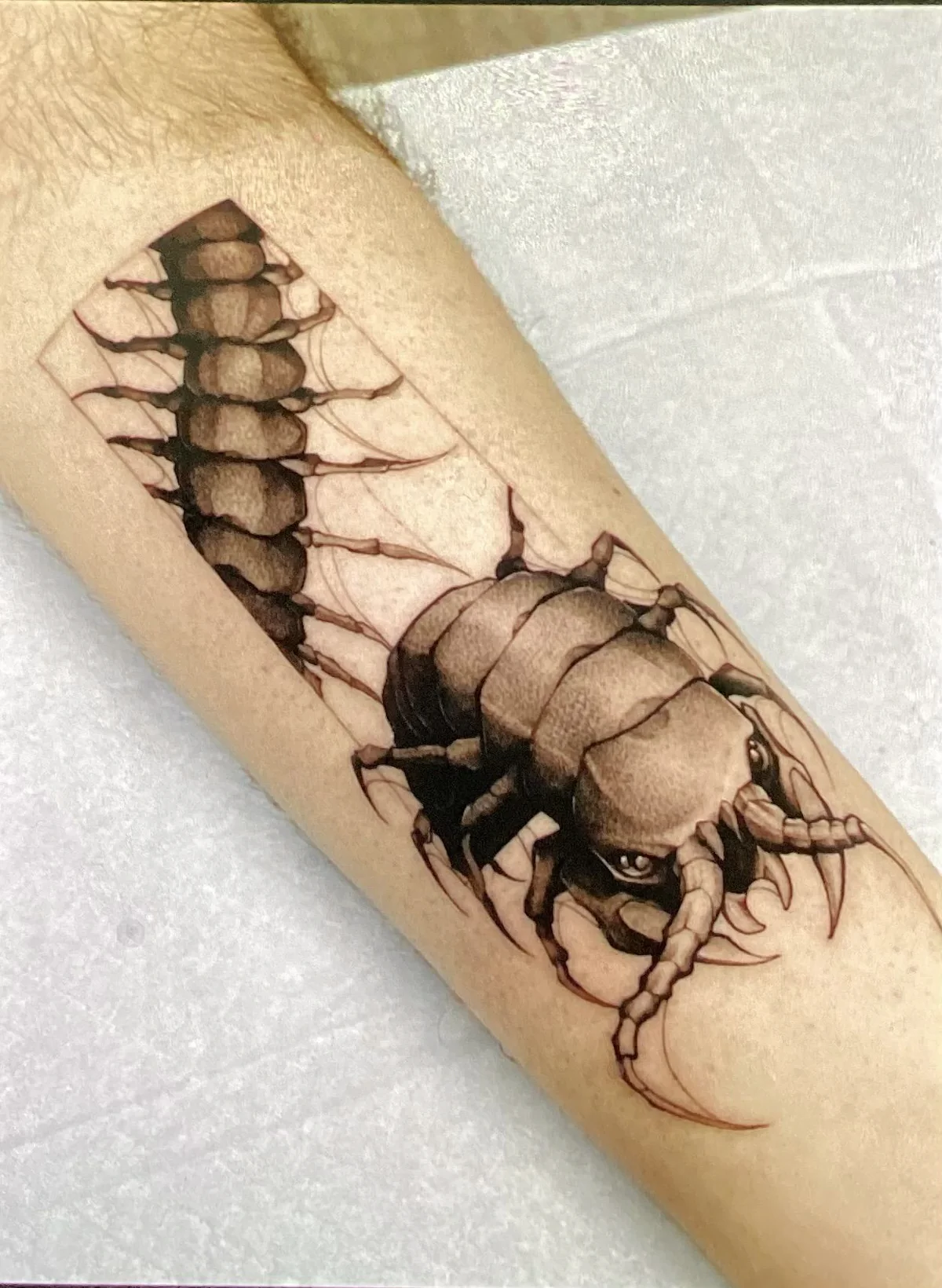
Warm brown shading gives this centipede an earthy, almost carved appearance. The broad head, large claws, and carefully shaped body plates make the creature feel realistic without becoming overly graphic. Its natural palette softens the intimidating subject and gives the tattoo a polished, artistic quality. This is a lovely example of how an unusual insect Design can feel refined when the colors and textures are handled with restraint.
The forearm provides enough length to preserve the details while keeping the head as the visual focus. Brown and black pigments can soften during healing, so the artist should create clear contrast between the light and dark sections. This style works beautifully beside botanical tattoos, antique illustrations, or other nature-inspired pieces. It is a good choice for someone who enjoys realism but wants something less severe than solid blackwork.
6. Black and Red Horror Centipede
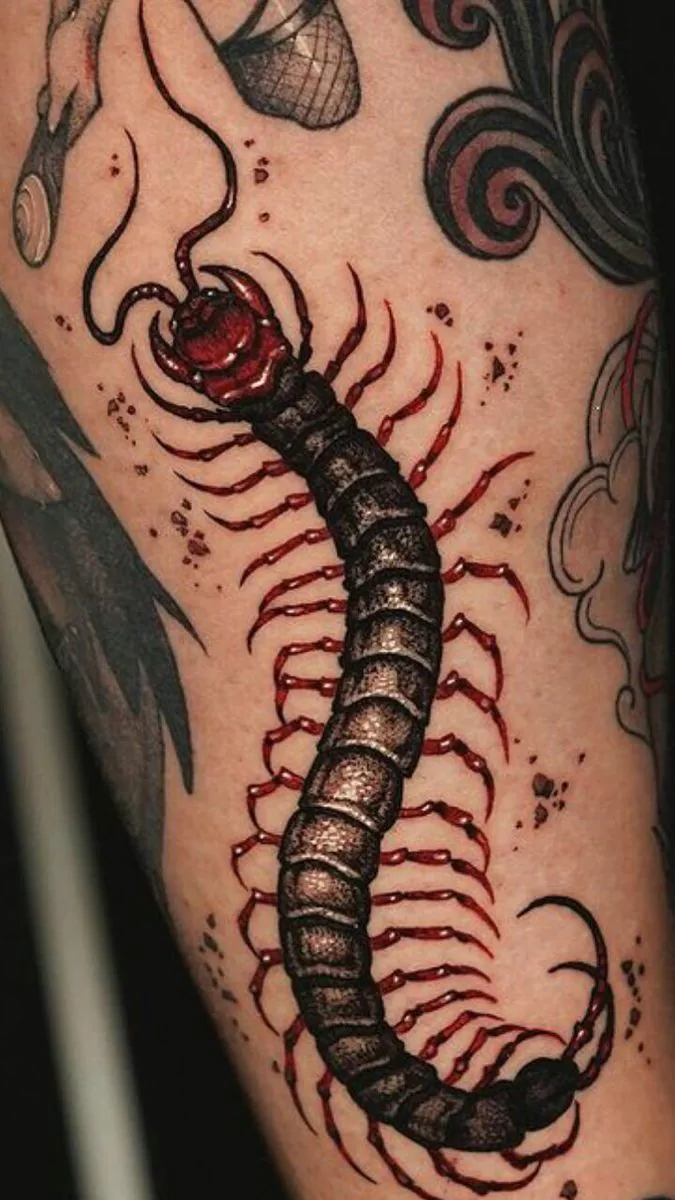
Glossy black body plates and sharp Red legs give this centipede a fierce horror-inspired mood. The creature curves through the composition with a heavy, deliberate movement, while small scattered marks make the tattoo feel raw and unpredictable. It has the energy of underground artwork and dark fantasy, making it a strong choice for someone who enjoys body art that feels fearless rather than decorative.
The upper arm, thigh, or broad section of the leg offers enough room for the tattoo to bend naturally. Red accents are most effective when they remain secondary to the black body, creating contrast without overwhelming the design. Avoid making the stencil too small because the thin legs could merge as the tattoo ages. Once healed, this piece will look especially striking beside black clothing, silver jewelry, and other dark tattoos.
7. Fine-Line Fantasy Centipede
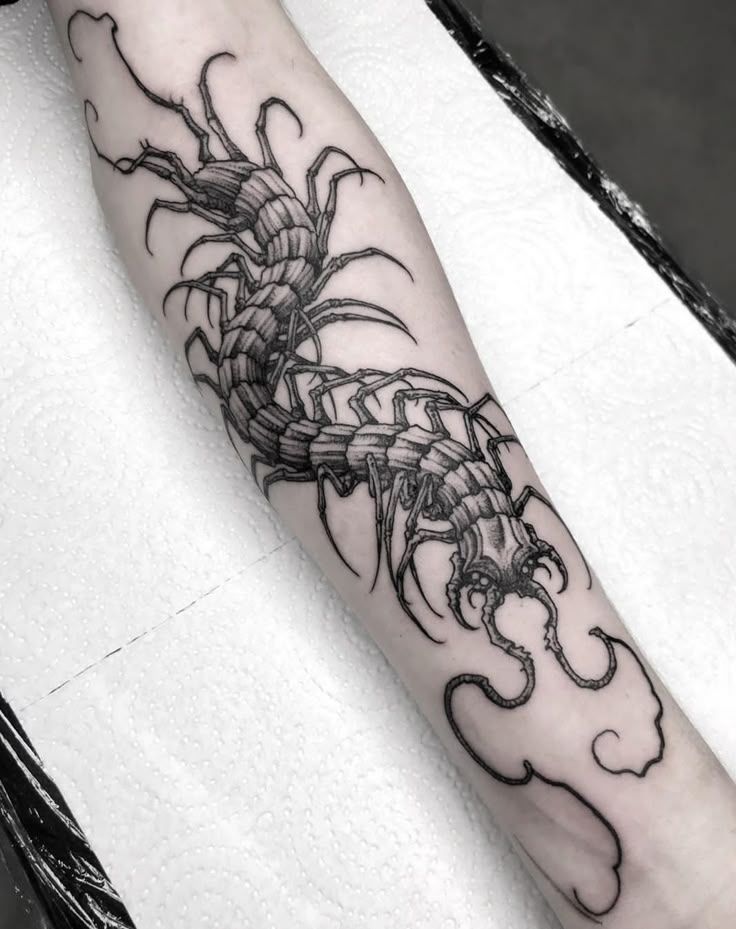
This delicate centipede feels like a creature from an old fantasy illustration. Fine black lines define the overlapping segments, while curling antennae and decorative flourishes add softness to the sharp insect anatomy. The result feels mysterious, elegant, and slightly otherworldly. It offers plenty of intricate detail up close, yet the overall silhouette remains clear from a distance.
The forearm, calf, or narrow section of the arm provides a natural home for this long design. Fine-line details need breathing room, so the artist should avoid placing the legs and decorative curls too closely together. Compared with heavy blackwork, this tattoo feels lighter and easier to combine with other styles. Protecting the healed piece from strong sunlight will help preserve the crisp lines that give it its graceful character.
8. Centipede with Red Spider Lily
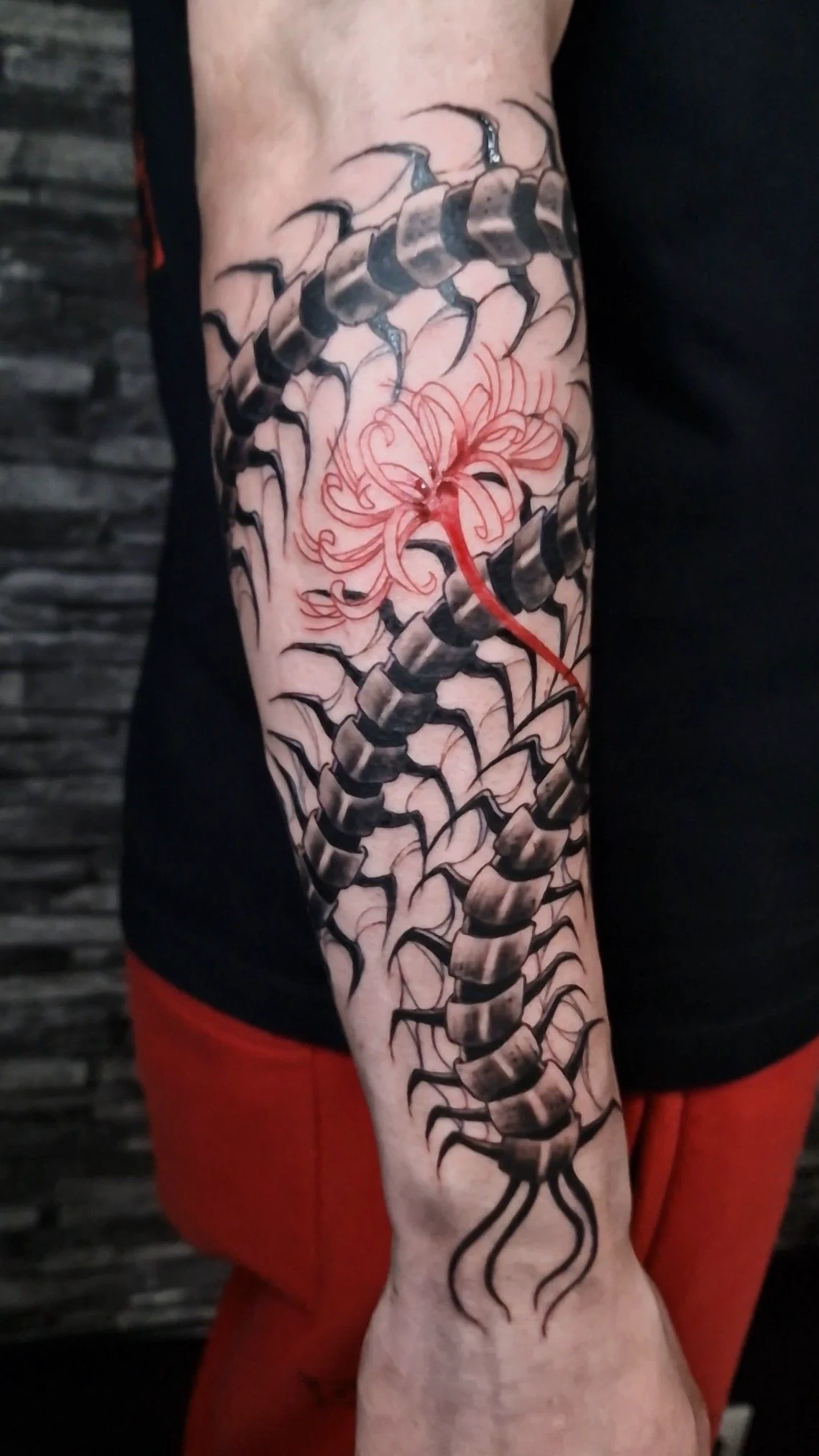
A centipede curling around a red spider lily creates a striking contrast between danger and beauty. The gray segmented body gives the composition structure, while the delicate flower introduces softness, movement, and emotional color. The creature appears to protect or circle the bloom, giving the design a quiet sense of mystery. It is dramatic without feeling cluttered.
The forearm is ideal because the centipede can wrap around the flower while both elements remain clearly visible. Keeping the spider-lily lighter and more fluid than the dark legs will help the two subjects stay separate. This design can also be adapted to the calf or upper arm. It pairs especially well with Japanese-inspired flowers, dark botanical tattoos, and developing sleeves that combine soft natural forms with stronger blackwork imagery.
9. Skull Segment Centipede Tattoo
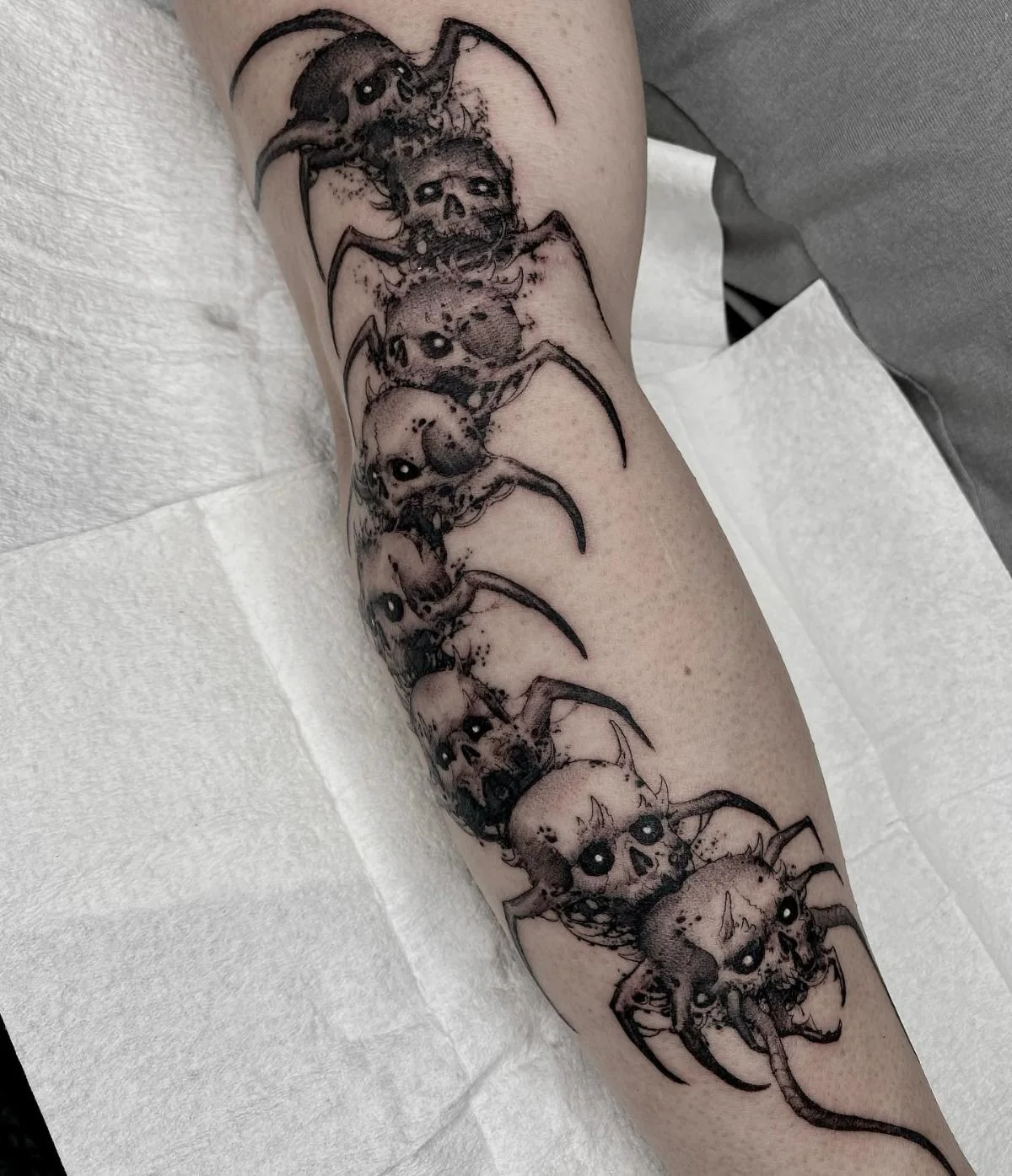
This imaginative centipede replaces ordinary body plates with a chain of tiny skulls. The repeated faces create an unusual visual rhythm, turning the creature into something that feels gothic, surreal, and strangely playful. Each skull carries slightly different shading and expression, encouraging the viewer to follow the entire length of the design. It is a clever concept for someone who loves horror imagery but still wants personality in the final piece.
The forearm, calf, or outer arm gives the skulls enough room to remain detailed and readable. A carefully prepared stencil is essential because inconsistent sizes could interrupt the natural flow of the centipede. Black-and-gray shading keeps the concept unified, while restrained dotwork can add atmosphere. Avoid shrinking the design too much, since the skulls need space for the eyes, teeth, and shadows to hold up over time.
10. Surreal Woman and Centipede Design
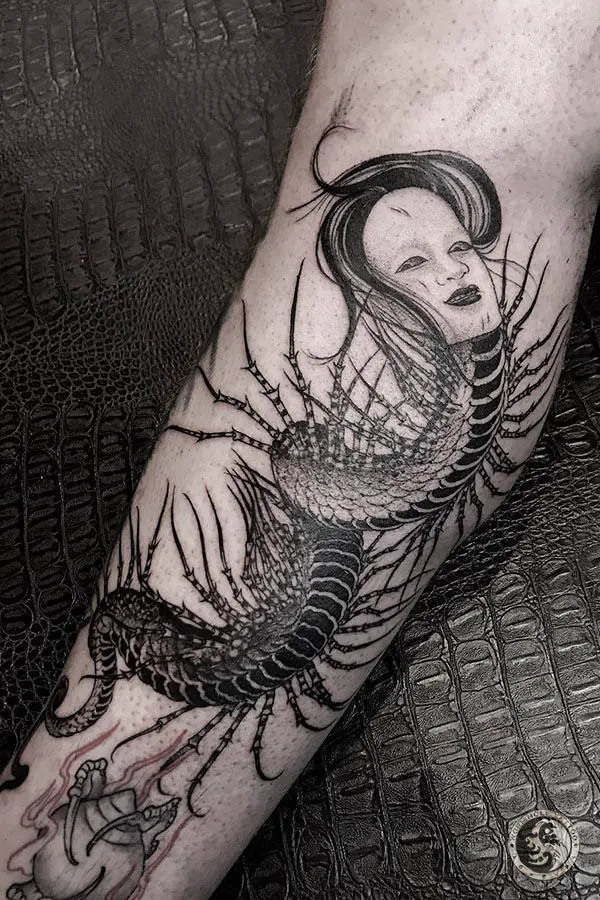
This surreal tattoo blends a centipede with a calm female face, creating a composition that feels like part dream and part beautiful nightmare. The woman’s peaceful expression contrasts with the sharp legs and textured insect body below her. That tension gives the design emotional depth and makes it feel more like a piece of visual storytelling than a straightforward creature tattoo.
A narrative piece like this needs enough room for both the facial features and the centipede anatomy. The forearm, calf, thigh, or upper arm would all work well. Keeping the face slightly lighter will prevent it from disappearing into the surrounding blackwork. This tattoo could later become part of a surreal sleeve with an eye, flowers, smoke, or architectural shapes. Choose an artist who is comfortable combining portrait linework with darker organic textures.
11. Sculptural Blackwork Arm Centipede
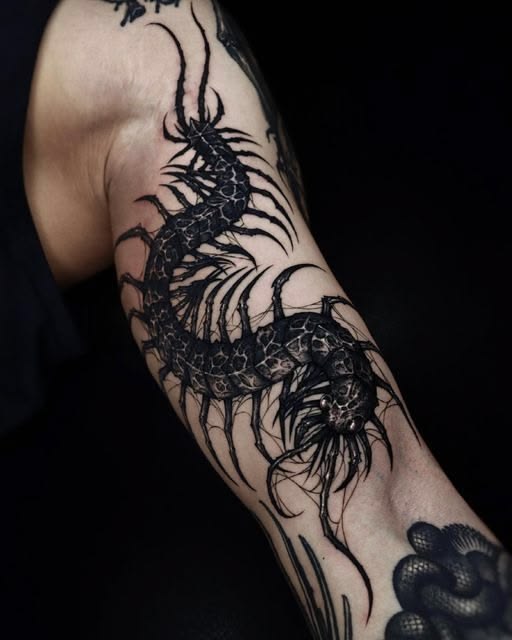
This centipede looks almost like dark armor wrapped around the upper arm. Dense shadows, pointed legs, and a dramatic curved body create a sculptural appearance that changes whenever the arm moves. The design needs no extra color or background because the silhouette already delivers plenty of impact. It feels modern, powerful, and slightly futuristic.
The upper arm is especially effective because the creature can follow the curve from the shoulder toward the elbow. Small highlights inside the body plates will stop the blackwork from becoming too flat. This placement looks excellent with sleeveless clothing and can connect naturally to a forearm or shoulder tattoo later. The bold structure works equally well for men and women who prefer strong monochrome designs.
12. Centipede Behind the Ear
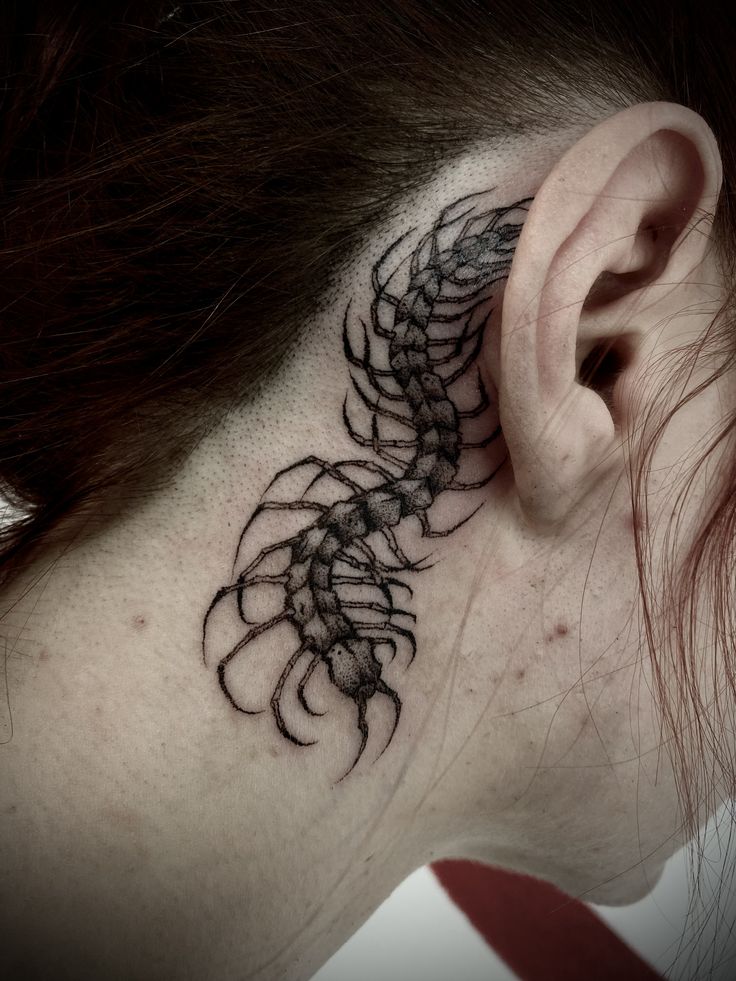
A centipede curving behind the ear creates a wonderfully unexpected little surprise. The creature appears to emerge from the hairline and crawl toward the neck, giving the tattoo a secretive and rebellious personality. Loose hair can hide much of the design, while a ponytail or short haircut reveals it completely. The soft shading keeps the subject from looking too harsh against this delicate area.
This neck placement works better with a moderately sized centipede than an extremely tiny one because the legs need enough room to stay visible. The area behind the ear can feel sensitive, so discuss breaks and session length with your artist. Lighter blackwork is practical in such a narrow space. Once healed, the tattoo looks especially striking with an undercut, sleek updo, short hair, or simple earrings.
13. Soft-Shaded Thigh Centipede
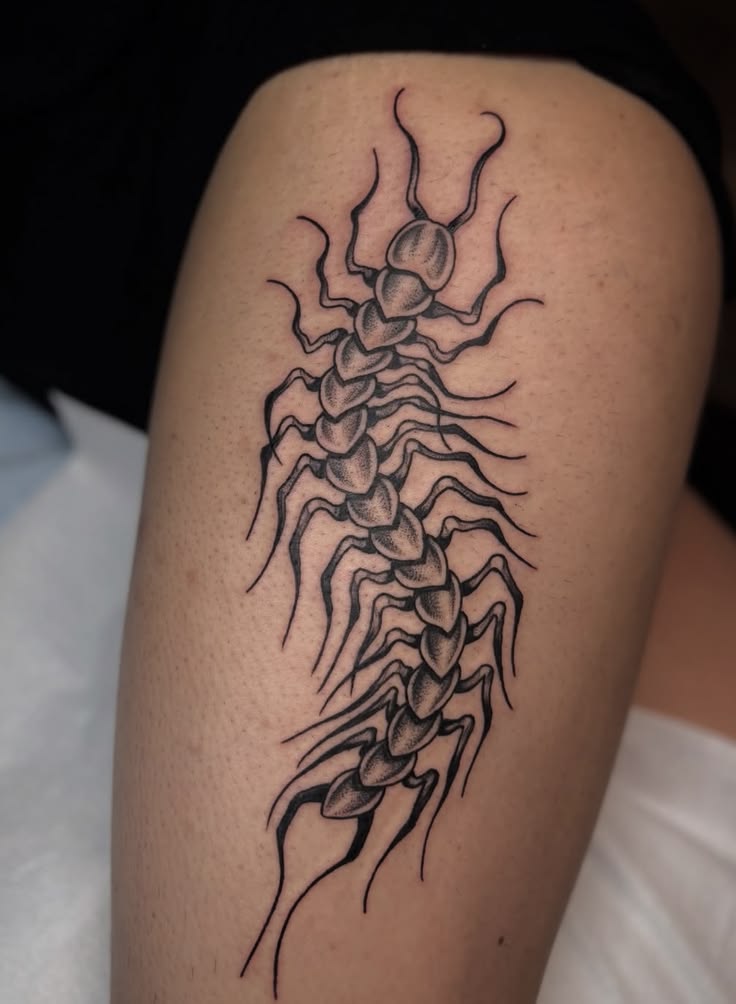
This centipede has a straightforward beauty that makes the unusual subject surprisingly wearable. Soft shading gives each body segment dimension, while the slightly irregular legs keep the creature looking natural rather than mechanical. Its curved shape follows the thigh beautifully and gives the design a confident but uncomplicated presence.
The thigh offers plenty of room for the anatomy to remain clear while also making the tattoo easy to cover when needed. This placement leaves space for future leg tattoos if you later decide to expand the composition. A balanced combination of black lines and gray shading will help the segments stay distinct. Compared with a more realistic version, this softer approach feels timeless and should age gracefully.
14. Small Simple Centipede Tattoo
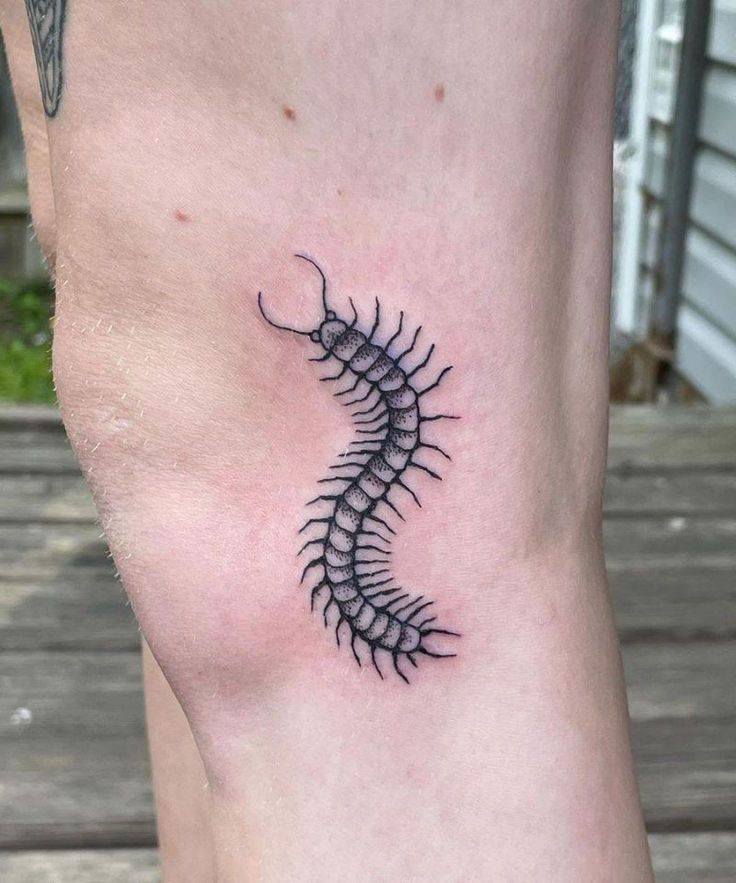
This compact centipede proves that a small tattoo can still have plenty of personality. The gently curved body and neat black legs create a clear silhouette, while subtle texture prevents the design from looking flat. It feels quirky, slightly creepy, and easy to live with. For someone trying insect imagery for the first time, this is an approachable option that still feels distinctive.
A simple centipede works well near the ankle, inner arm, calf, elbow, or lower leg. Avoid making the stencil excessively small because very fine legs can soften together as the tattoo ages. Simplified anatomy and consistent spacing will help preserve the shape. The shorter session and manageable size also make this a practical first tattoo or an easy addition to a growing patchwork collection.
15. Minimal Red-Line Centipede
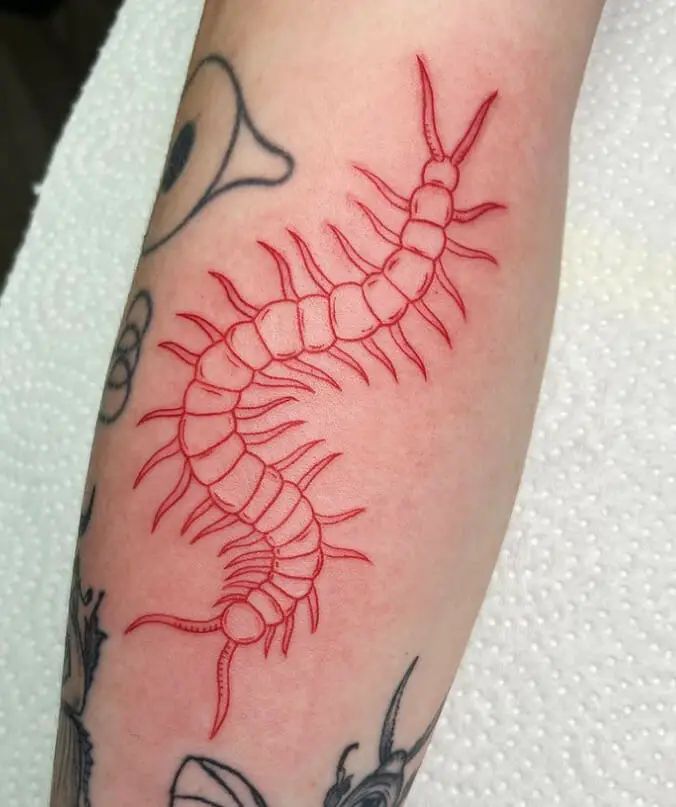
This red-line centipede feels light, energetic, and almost hand-drawn. Without dark shading, the curved body appears fluid and delicate, while the unusual color gives the familiar insect shape a fresh identity. It has a modern sketchbook quality that feels playful rather than intimidating. The simplicity allows the movement of the creature to become the main feature.
Red-only tattoos should be created by an artist who understands how the pigment heals on different skin tones. The forearm, calf, or outer arm provides enough room for the long S-shaped design. Keep the line weight consistent and avoid making the legs too fine. This piece looks especially effective beside smaller black tattoos, where the contrasting color adds energy without taking up a large amount of space.
16. Collarbone and Shoulder Centipede
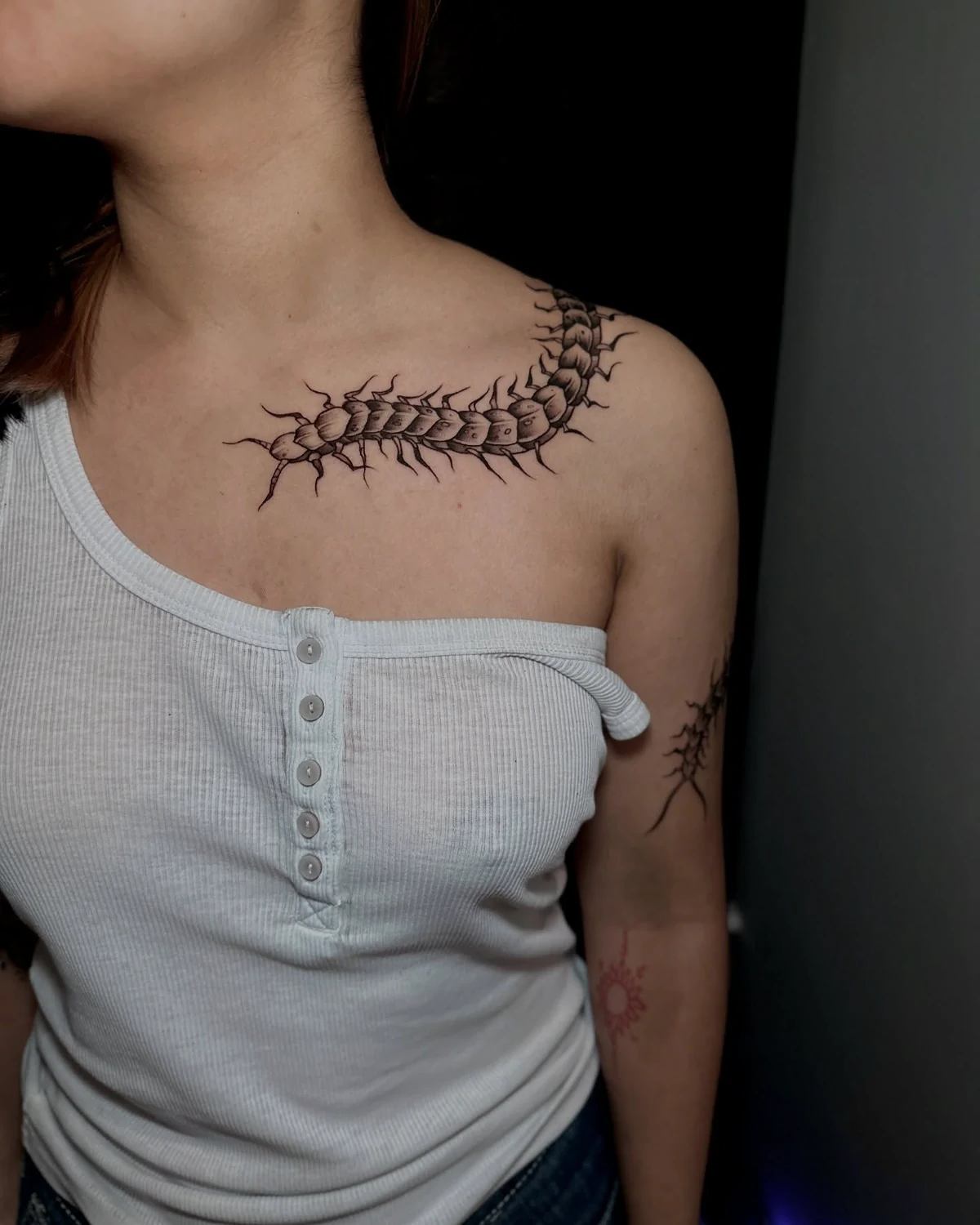
A centipede traveling across the collarbone and onto the shoulder creates the effect of dark, living jewelry. The creature follows the natural structure of the body rather than sitting inside a rigid frame, which makes the tattoo feel unexpectedly elegant. An open neckline reveals the entire design, while a higher top can hide part of it and change the overall mood.
This shoulder placement requires careful body mapping. The artist should position the stencil while you are sitting or standing naturally because posture can alter the collarbone line. Moderate shading will keep the tattoo dimensional without making the upper chest feel too heavy. It can later connect to a neck, back, or upper-arm piece, making it a strong starting point for a larger composition.
17. Heavy Blackwork Forearm Centipede
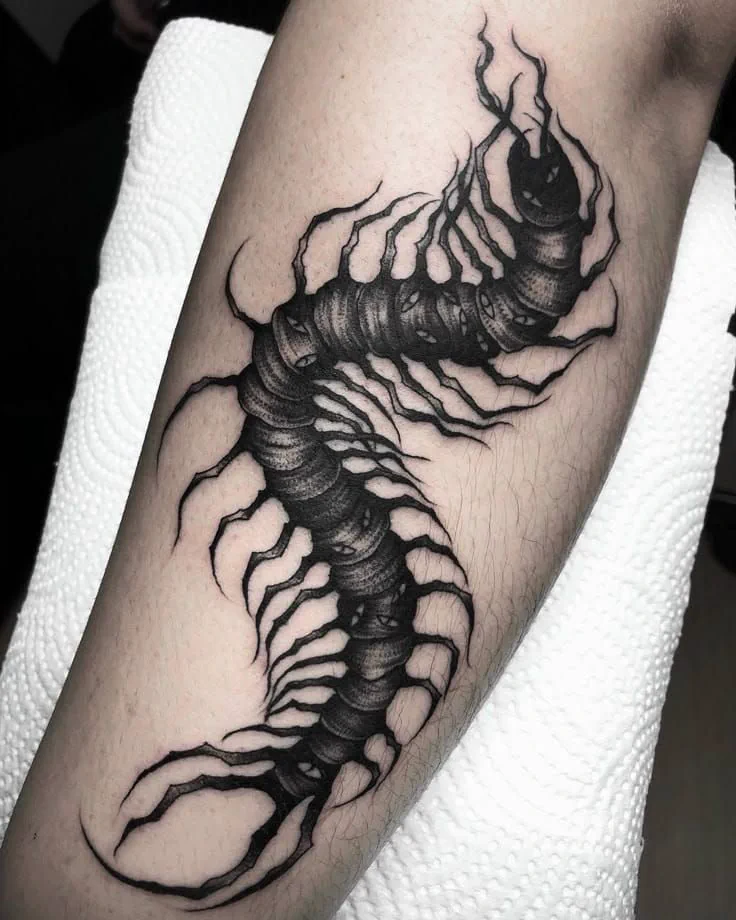
This large centipede gives the forearm an immediate sense of drama. Its dense body, oversized legs, and strong S-shaped curve create a silhouette that remains clear from a distance. Layered gray textures add detail when viewed up close, preventing the darker sections from becoming visually flat. The result feels moody, forceful, and beautifully direct.
Heavy blackwork needs room, and the forearm offers enough length to separate every segment and leg. The calf or outer arm could also support the same scale. Make sure small areas of open skin remain between the darkest sections so the design stays readable over time. This bold structure may particularly appeal to men, although it works equally well for anyone who enjoys strong monochrome body art.
18. Paired Centipede Arm Design
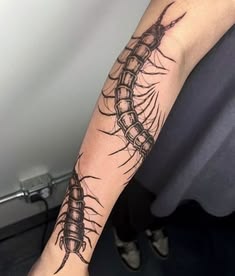
Two centipedes placed along the arm create a sense of movement and conversation. The creatures appear to travel toward one another across the skin, making the composition more dynamic than a single straight line. Their repeated shapes bring texture and rhythm, while the arrangement cleverly uses the area around the elbow instead of avoiding it.
A paired design arm concept works best when both creatures share similar line weight and shading. The stencil should be checked with the elbow bent and straight so the centipedes still look natural as the arm moves. Leaving open space between them prevents crowding and provides room for a small heart, eye, flower, or filler later. This is a smart approach for building an organic patchwork sleeve.
19. Traditional Red Centipede Tattoo
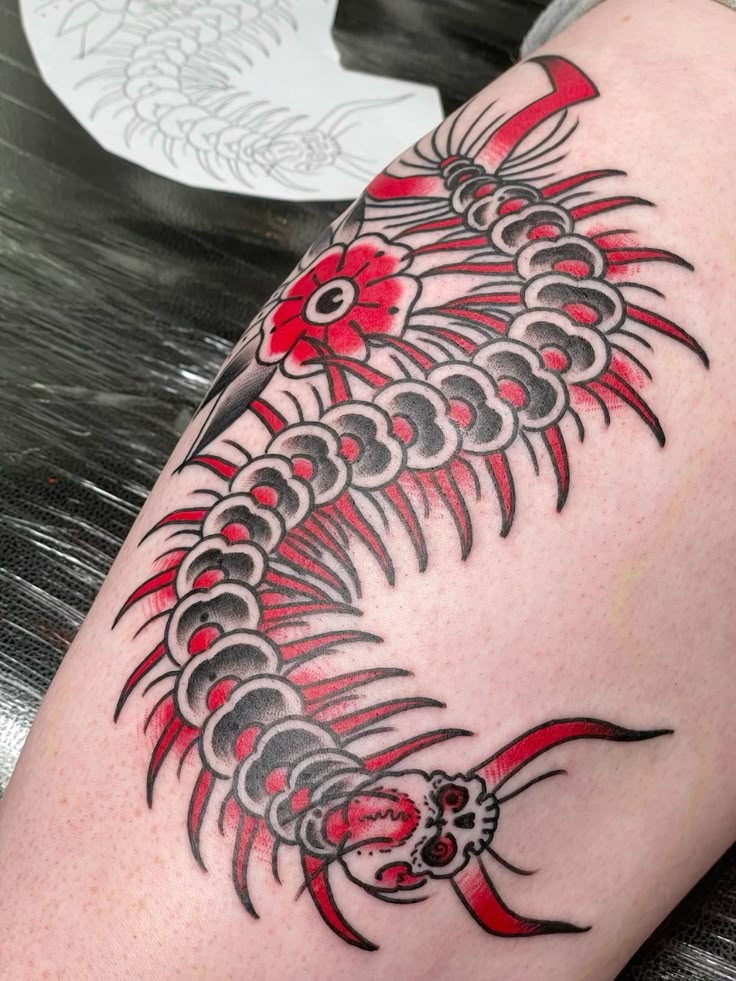
This bold red and gray centipede carries the unmistakable confidence of traditional tattooing. Rounded body plates, strong black outlines, decorative ends, and an eye-like detail turn the insect into a graphic emblem rather than a realistic study. The piece feels energetic, balanced, and full of character, making it a memorable addition to a colorful tattoo collection.
The thigh, upper arm, or calf provides enough width for the many legs and decorative details. Strong outlines are essential because they keep the red and gray areas separated as the tattoo ages. This design looks excellent beside roses, flames, daggers, and other traditional imagery. A precise design stencil will ensure that the repeated segments follow a smooth curve rather than becoming uneven.
20. Curving Arm Wrap Centipede
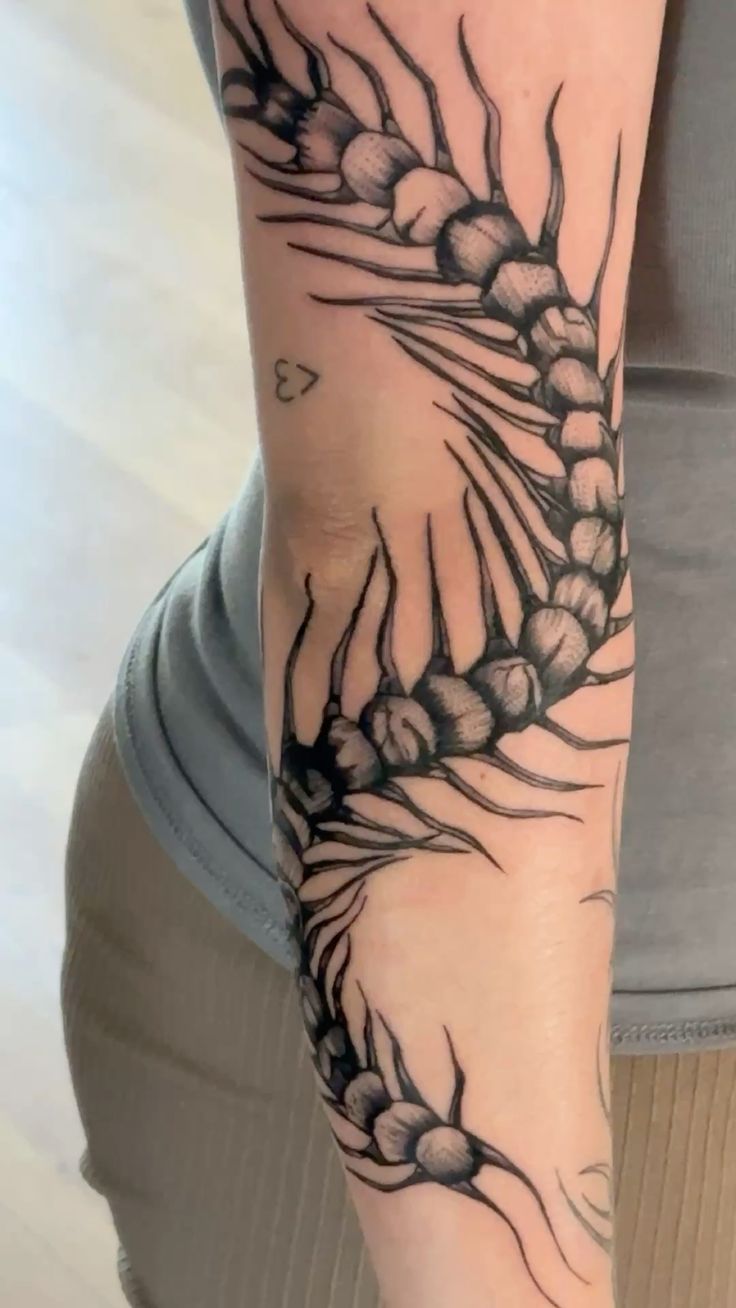
This centipede winds across the arm in a loose curve that makes it appear to be crawling over the skin. Large body segments and extended legs create dramatic open spaces, giving the tattoo movement without relying on color. The irregular path also allows the design to blend naturally with smaller surrounding tattoos, which makes it ideal for a collected patchwork look.
An arm wrap should be designed around the wearer’s anatomy rather than copied directly from a flat reference. The artist can position the body first and then adjust the legs around the elbow and inner arm. Soft gray shading adds volume, while darker tips preserve the silhouette. This design can stretch from the forearm toward the upper arm and become the foundation of a larger black- and cybersigilism-inspired sleeve.
21. Shadowed Blackwork Thigh Centipede
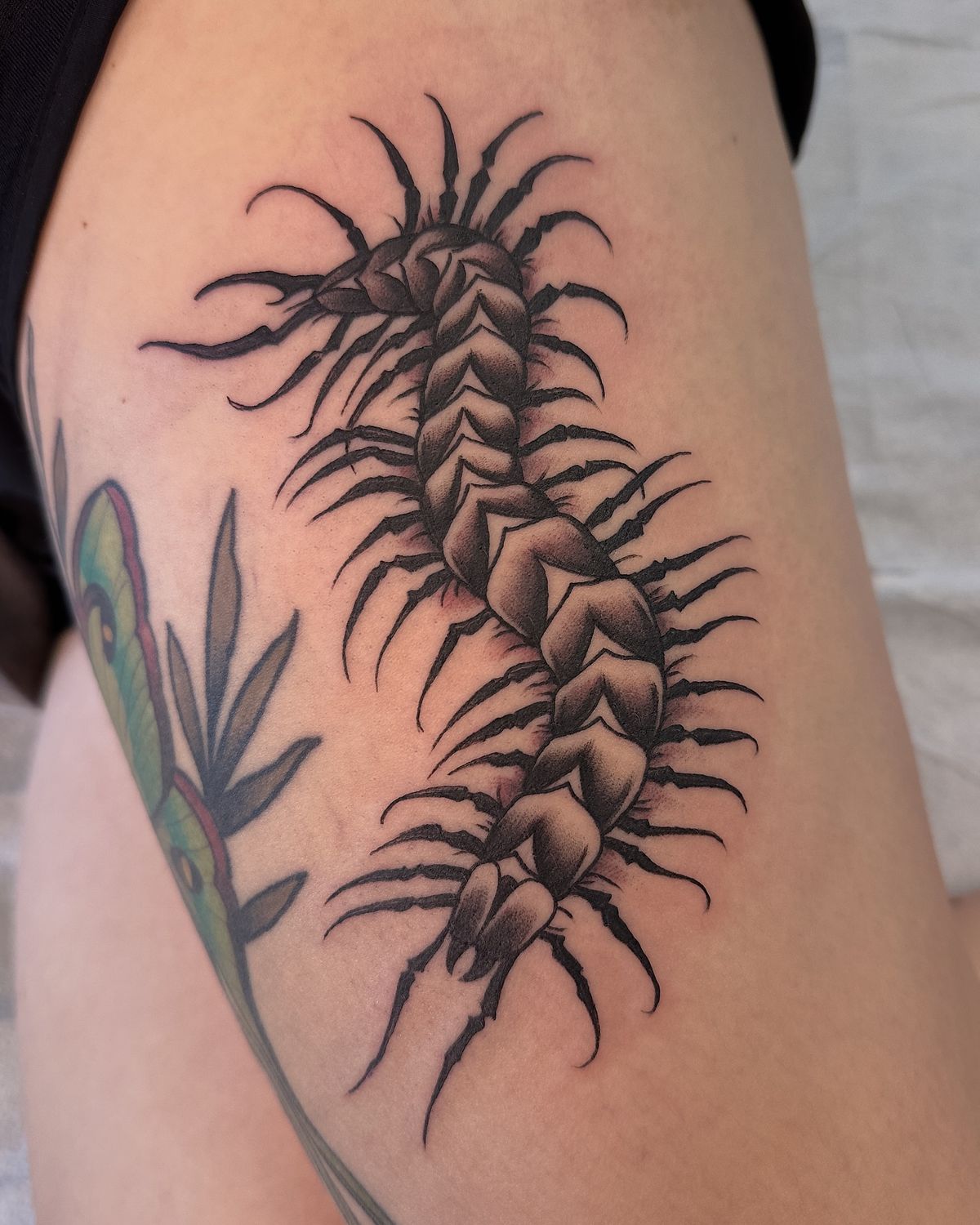
This centipede has a wonderfully armored appearance, with overlapping plates folding down the center like a dark spine. Soft gray shading gives each section weight, while the long, pointed legs add sharpness around the edges. The design feels strong, sculptural, and almost medieval, as though the creature is protected by its own suit of armor.
The thigh provides enough room for every central plate to remain distinct. Ask your artist to preserve lighter highlights inside the body so the blackwork does not become one solid strip. This scale also allows the legs to stay bold and readable. It is an excellent choice for someone who wants a large leg tattoo that can remain independent or eventually become part of a wider composition.
22. Long Centipede Hand and Forearm Tattoo
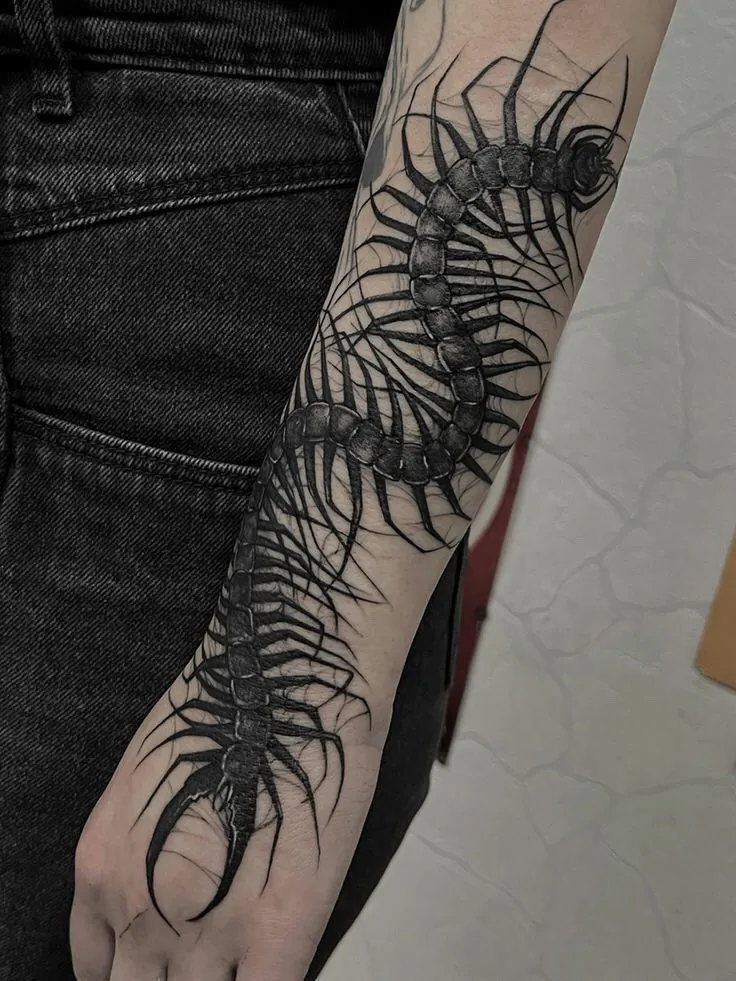
This centipede stretches dramatically from the forearm toward the hand, creating a tattoo that cannot be ignored. Its dark body winds through a forest of long black legs, giving the design an energetic and almost electric silhouette. It feels fearless, restless, and alive, making it a strong choice for someone comfortable with highly visible body art.
A hand and forearm tattoo needs careful planning because the two areas move and heal differently. The artist should test the stencil while the wrist is both relaxed and bent. Hand ink may fade faster because of regular washing and friction, so occasional touch-ups could be necessary. Keeping the central segments larger and darker will help the design remain readable even if the finest lines soften.
23. Cybersigilism Centipede Shoulder Piece
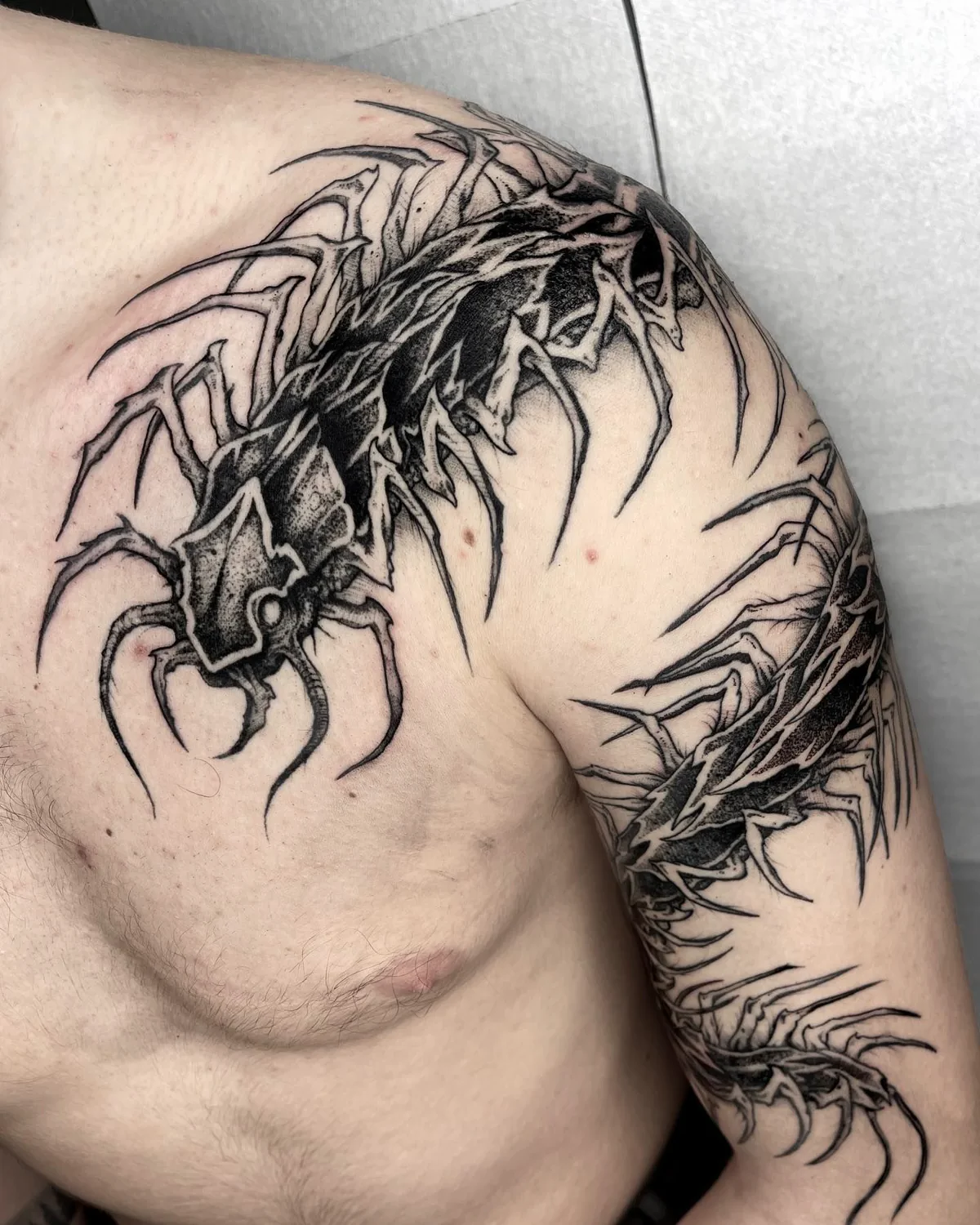
This sprawling centipede transforms the chest, shoulder, and upper arm into one continuous composition. Jagged plates and blade-like legs give the creature a biomechanical quality, while the exaggerated curves make it feel more symbolic than realistic. The pointed black forms bring a clear Cybersigilism influence, creating a tattoo that looks powerful, futuristic, and intentionally dramatic.
The large scale is what makes this design so effective. Instead of treating the shoulder, chest, and arm as separate areas, the artist uses every curve to guide the creature’s movement. This placement suits men and women who are ready for a major statement piece. Leaving open skin between the darkest shapes will preserve definition and make it easier to continue the tattoo toward the back or forearm later.
24. Simple Outline Centipede Leg Tattoo

This outline centipede has a clean, illustrative charm that lets the unusual anatomy become the main attraction. Its segmented body bends gently down the leg, while the long antennae add a slightly whimsical touch. Without heavy shading or background decoration, the tattoo feels open, relaxed, and easy to read.
A simple design is ideal for someone who likes the subject but prefers a lighter result and a shorter tattoo session. The calf, thigh, or forearm can all accommodate the long shape. Keep the body segments large enough to hold their structure and avoid placing the thin legs too closely together. The outline can remain minimal or be expanded later with red accents, flowers, or dotwork shading.
25. Colorful Traditional Arm Centipede
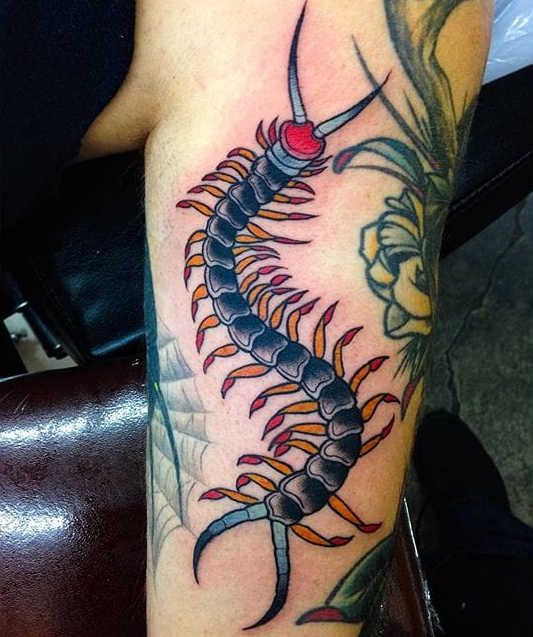
This colorful centipede brings classic tattoo energy to an unexpectedly creepy subject. Deep blue body plates, warm orange legs, red details, and strong black outlines create a lively traditional palette. The curved composition has plenty of motion, yet every segment remains neat and easy to distinguish. It feels playful, bold, and unusual enough to become the most memorable part of a collection.
The upper or lower arm gives this design enough length to preserve the bright color pattern. Strong outlines will keep the shades separated as the tattoo ages. Ask your artist to match the saturation of any nearby traditional pieces for a cohesive result. This creature also works wonderfully in a patchwork sleeve, where its curved body can fill a long, narrow gap.
26. Straight Blackwork Inner Arm Centipede
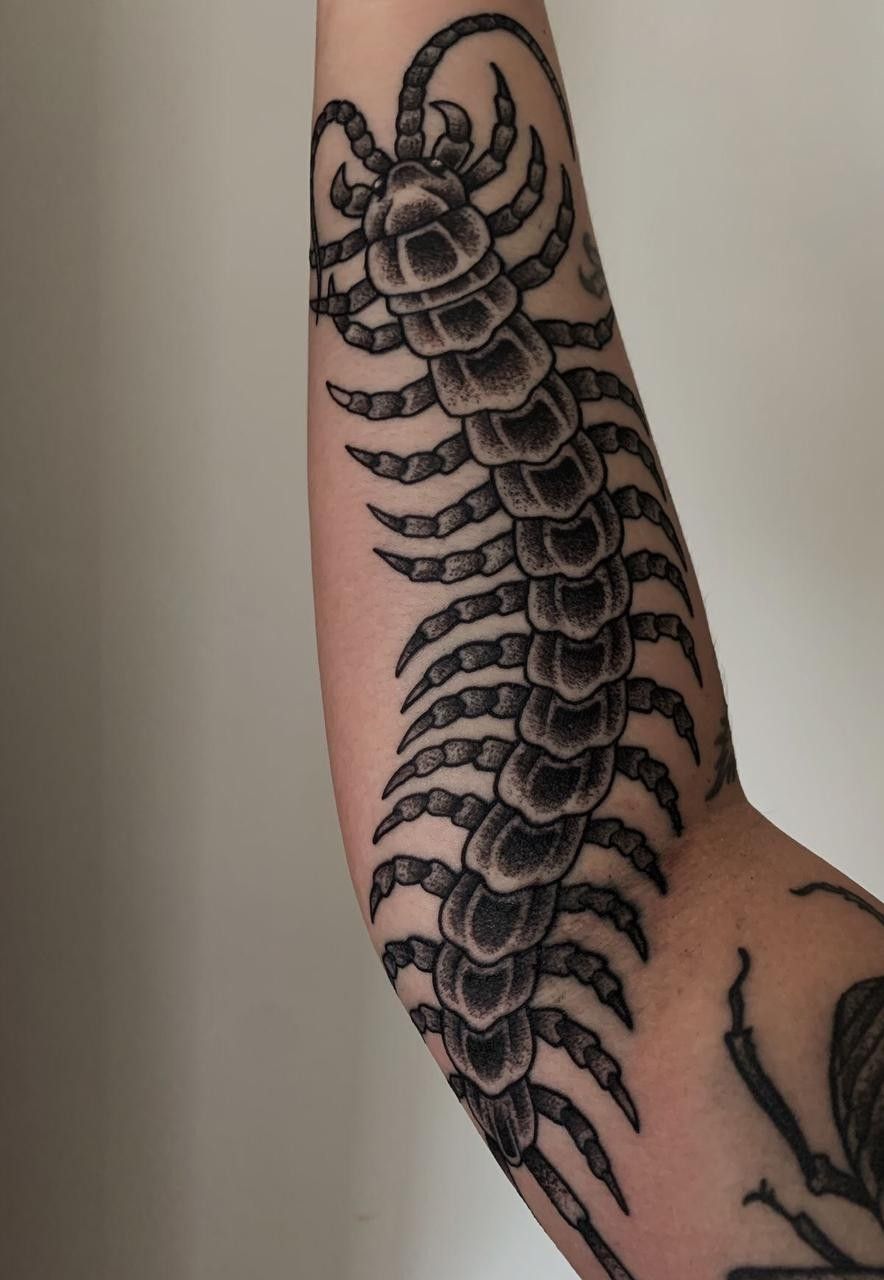
This centipede runs along the inner arm like a dark emblem. Wide armored plates form a strong central column, while the repeated jointed legs create a precise rhythm on both sides. The nearly straight composition gives the creature a controlled and deliberate quality. It feels tough and clean without needing extra decorative elements.
The inner arm naturally supports a long design arm layout, although the skin can be sensitive near the elbow and armpit. Plan the size so the head and final segments do not sit directly inside areas that fold heavily. Dot shading adds texture without filling every section solid black. The tattoo remains easy to display in sleeveless clothing while still being simple to cover when necessary.
27. Large Centipede Back Tattoo
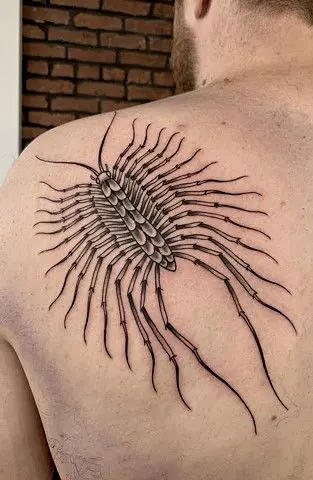
A centipede spread across the upper back creates a wonderfully unsettling illusion. The narrow body stretches over the shoulder blade while long legs radiate outward, giving the creature an airy but ominous presence. It resembles a vintage scientific illustration enlarged to a surreal scale. As the shoulders move, the design seems to shift subtly with the body.
The Back offers room for a wide composition that would feel crowded almost anywhere else. Varying the lengths of the legs will help them follow the shoulder blade naturally. This placement could later be expanded with a second centipede, botanical elements, a house, or darker blackwork near the spine. Loose clothing will reduce friction during healing, and assistance may be useful when applying aftercare to the center of the tattoo.
Centipede tattoos are not designed to blend quietly into the background, and that is part of their appeal. They can feel mysterious, dark, artistic, playful, or surprisingly elegant depending on the color, placement, and level of detail. Even a simple centipede can create beautiful movement because the segmented body naturally follows the curves of the skin.
Choose an artist who understands the style you want, especially when your design includes fine legs, dense blackwork, bright red ink, or a complicated arm wrap. A well-planned stencil should be adapted to your anatomy instead of copied directly from a flat reference. With thoughtful spacing and the right placement, a centipede tattoo can remain bold, readable, and completely unforgettable for years.